
We are currently learning about marginal analysis. Having to recall some math from my undergrad days, but it’s fun and definitely more straightforward than some of the engineering courses I had to take. https://www.mbamath.com/ is the companion site where most of the quizzes and assignments need to be completed for this topic. First one already done (after spending a good 3-4hrs or so).

This also helped with a different paper where I posted the following:
Q: Price gouging often occurs after natural disasters such as storms or earthquakes. Using supply and demand analysis briefly explain why rental prices in California skyrocketed soon after the recent wildfires, even though price gouging is not permitted?
A: With many neighborhoods completely destroyed and rendered inhabitable, there has been a significant surge in demand for housing in a very short period of time. Although price gouging is illegal in California, and rental price increases have a ceiling during emergency conditions, there are many reports of extremely high increases in asking prices for the existing rental supply. Consumers are willing to pay more as well to get ahead of the competition. For instance, a recent report states that “Bidding wars are breaking out for leases in some of the remaining coveted areas [and] a rental on Wednesday was going for $25,000 a month. Almost instantly, prospective tenants were offering $40,000 a month, though California law bans rent increases of more than 10% during a state of emergency” (Picciotto, Friedman, & Frosch, 2025). This also suggests that the consumers are becoming less sensitive to price increases given the urgency created by the scarcity of available housing.
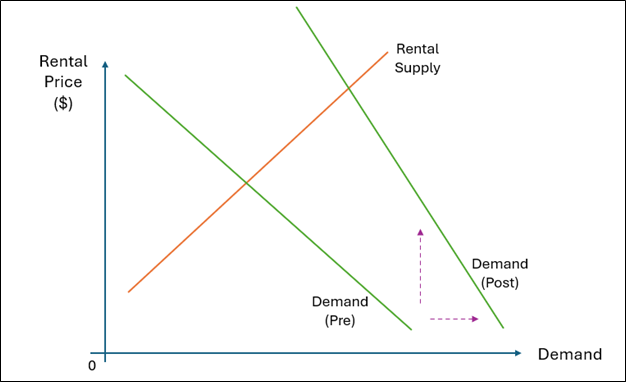
I think the following figure illustrates the shift in supply and demand dynamics before and after the fires. In this case, the demand curve not only shifts to the right but also becomes steeper, reflecting decreased sensitivity to price. This steepening effect may be more pronounced in the affluent neighborhoods where displaced residents more likely have greater purchasing power to compete for housing. Conversely, in less affluent areas, the slope might not increase as drastically since these lower-income households often have limited savings (required to cover upfront costs like security deposits), and may also be experiencing a loss of wage-based income.
References:
Picciotto, R., Friedman, N., & Frosch, D. (2025, January 12). Their wealth is in their homes. Their homes are now ash. The Wall Street Journal. Retrieved from https://www.wsj.com/real-estate/los-angeles-fire-housing-shortage-a1424502
 Thusitha Mabotuwana's Blog
Leave a comment